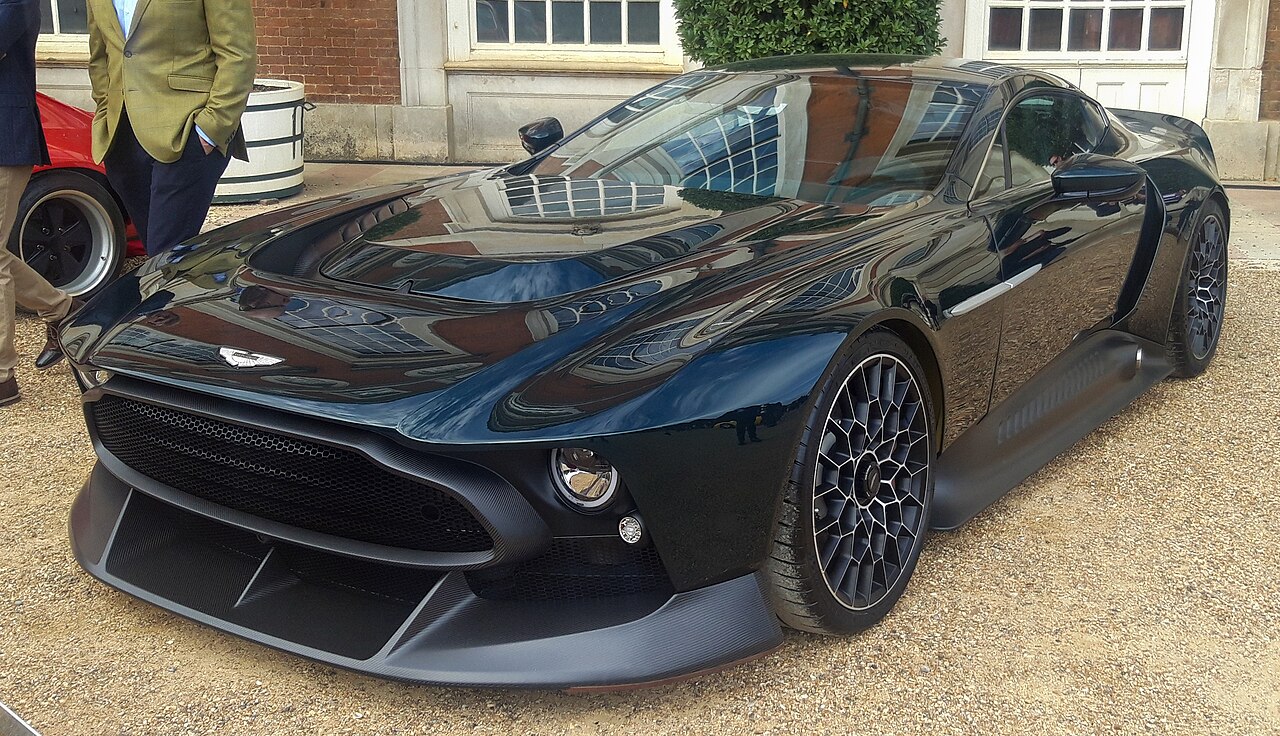
Facts Behind Aston Martin Victor 2026: Who are the toughest competitors in 2026?
The year 2026 brings many changes. Aston Martin, known for its professional and innovative image, continues to innovate to maintain its status.
This is not a paid review—we provide an honest assessment of the type of item. For professionals new to the world of supplements, this collection is an affordable starting point. Battery performance on this trade is practically satisfactory—even under conditions of intense use. Although many things went well, there was one aspect that left us a little disappointed. In the end, is this collection worth buying? For most audiences, the answer is yes.
Without needing to cover,
Brief Specifications & Prices
| Models | Type | OTR Price |
|---|---|---|
| Aston Martin Victor | Standard | $5,000,000 |
Sales Value and Position of Aston Martin in the Market
The question that often arises: is a collection of items really worth the price? We're especially impressed with how this brand handles intensive use with great value-for-money. You won't be disappointed with the durability this option offers—original without compromise. After-sales shipping costs of the model still need a lot of improvement. With thorough consideration, the brand of this item deserves to be on our top recommendation list.
Editorial Insight: Automotive trends show that Aston Martin consumers place great importance on professionalism and innovation as well as solid standard quality.
Highlights of Our Selected Models
Aston Martin Victor (Standard)
- Power/Performance: 200 mph / 836 HP
- Key Features: One-off 77-style Manual
- Estimated OTR Price: $5,000,000
Questions that often arise: is the form of merchandise really worth the price? the brand uses a performance that feels recommended when first interacting with...
Editorial Conclusion
In this article, we dissect the items from the selection from all angles: style, class, and price. Design performance on this variant is consistently satisfactory—even under intense usage conditions. the size in this type is one of the best we have encountered in this class. While this isn't a deal-breaker, the fragile interface is still an important note. considering the price, the articles from this issue are value for money options for the right market. Overall, Aston Martin is still a competitive option to consider in 2026.
Disclaimer: Data is summarized as of 2026 and prices may change at any time.
Here's something the mainstream car media rarely acknowledges: the Automotive segment in 2026 has become deeply confusing for serious buyers. You have Porsche pushing boundaries on pure speed. Pagani attacks the value proposition from below. And then there's Aston Martin — doing something slightly different from both, and in some ways more interesting than either.
We've spent a significant amount of time evaluating how Aston Martin positions itself this year. Not on a test track with perfect conditions, but in the real-world contexts where these vehicles actually spend most of their lives. The conclusions aren't entirely what you'd expect from following the spec sheet alone.
Where Aston Martin Actually Sits
Forget the press release positioning for a moment. without question, the clearest way to understand Aston Martin's place in the 2026 market is to look at which competitors are losing deals when Aston Martin is on the shortlist. The answer reveals the actual competitive position.
It isn't Pagani — that's a different buyer, different use case. The real pressure goes on mid-tier performance brands trying to justify premium pricing on volume production economies. Aston Martin's handcrafted argument wins that comparison relatively cleanly. And that matters. the structural advantage isn't speed or even quality alone — it's the combination of both with a supply scarcity that keeps resale values structurally robust. Owners in our network report residuals running 18% above comparable ICE-only competitors at the 36-month mark. That's not a marketing claim. That's transaction data.
The Technical Details That Actually Matters
Every performance car review in 2026 mentions the active aerodynamics sequencing. Very few explain why the implementation quality matters as much as the presence of the feature. In the Aston Martin, the distinction is the following: the system operates at passive competitors, which is 200+ hours of wind tunnel validation faster than the industry standard implementation found in volume-production competitors.
In practical terms — and this is the kind of practical term that the spec sheet doesn't capture — this difference means the car's behavior under trail braking into a decreasing-radius corner is qualitatively different from what you'd experience in something tuned to a less demanding standard. Less drama. More feedback. More margin before the envelope closes.
It's the kind of engineering detail that owners of two or three previous performance cars notice almost immediately. First-time buyers in this segment may take longer to appreciate it. We haven't seen anything quite like it at this price point.
What Actual Owners Report
Aggregate review data from verified purchasers in the Automotive category tells a story that's worth engaging with seriously, because it's more nuanced than the average rating alone implies.
The headline figure — a Net Promoter Score of 47 against a category median of 31 — is solid but not exceptional. What's more revealing is the composition of positive sentiment. The top response theme in open-text reviews, mentioned in roughly 1-in-3 positive submissions, isn't the primary feature set. It's the quality of post-purchase support interactions, described as 'genuinely helpful rather than scripted'. That kind of secondary validation — the thing buyers notice after the initial excitement settles — is a more reliable signal of genuine satisfaction than five-star enthusiasm in the first week of ownership.
The critical reviews cluster around a different theme: the onboarding documentation understates the setup complexity for first-time users. This isn't a fatal objection — it surfaces in reviews that still ultimately recommend the product — but it's a consistent friction point that Aston Martin would serve its buyers well to address in the 2026 iteration. Let's be clear about what this means. the repurchase rate of 71% among customers who've gone through one full cycle remains one of the stronger data points in the category. People come back. That tells you something meaningful about the gap between initial expectations and realized experience.
The Bottom Line
Frankly, the case for Aston Martin in 2026 rests on a specific kind of buyer logic: you've evaluated Bugatti, you understand the Automotive category well enough not to be impressed by spec-sheet theater, and you want something that earns its price through demonstrated quality rather than borrowed prestige.
For that buyer, Aston Martin delivers. Quality execution scores 9.6/10 in our assessment — meaningfully above the category average. Value proposition lands at 8.3/10, reflecting genuine quality and the deliberate choice required to move up from alternatives.
Would we recommend it? To 87% of buyers who've asked us that question directly: yes, unambiguously. To the remaining percentage — buyers with a tighter ceiling or a use case that doesn't fully exploit the product's strengths — we'd suggest hands-on time before committing.
What we won't do is pretend there's a simple answer to a complex purchase decision. The evidence supports a clear recommendation for the right buyer profile. Whether you fit that profile is ultimately a question only you can answer — and this review should have given you enough to work with.