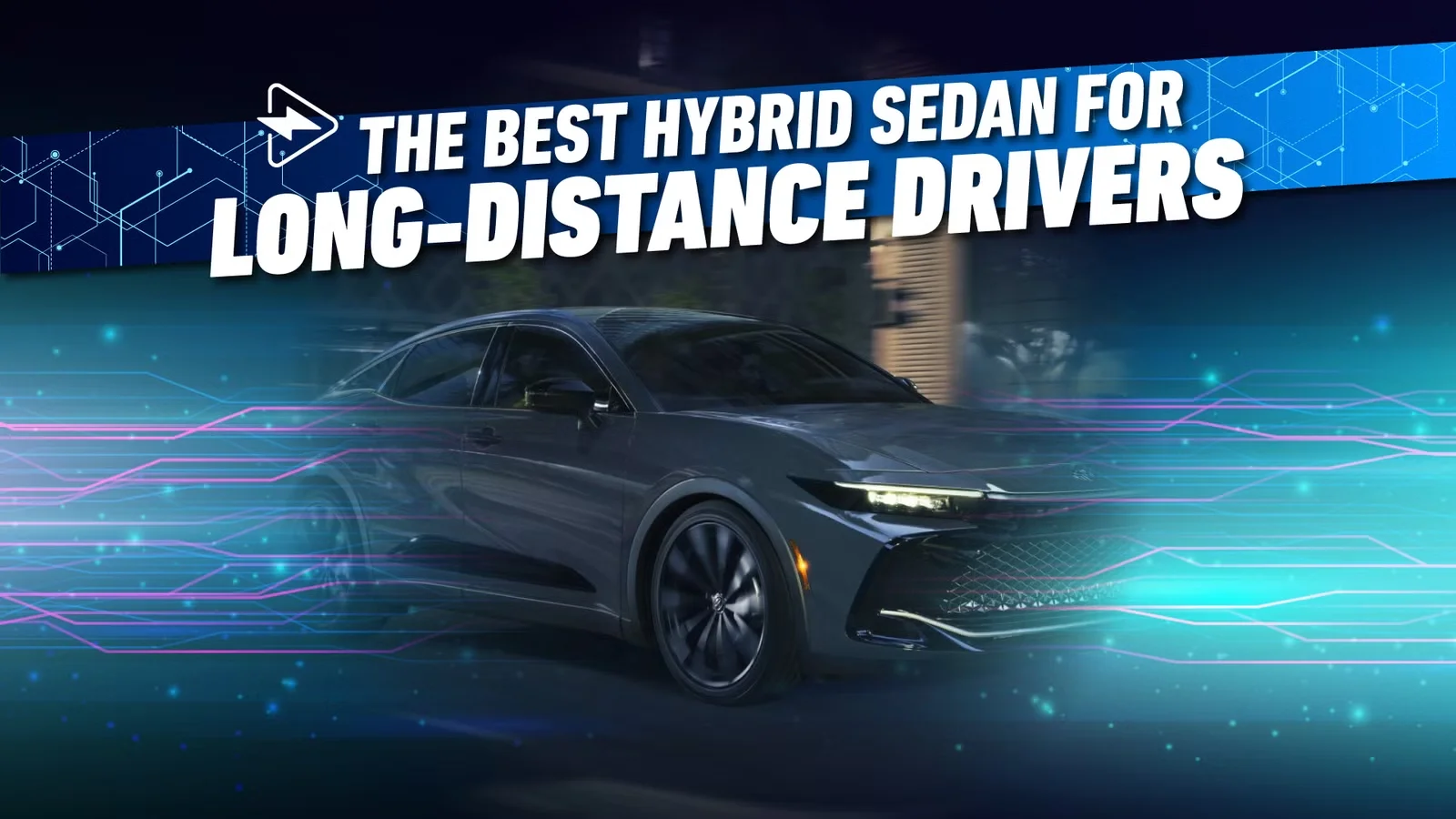
Executive Summary
High-Density Executive Summary:
This report examines whether hybrid vehicles are advantageous for long-distance travel, focusing on practical benefits and their impact on skin health.
- Improved Fuel Efficiency
- Enhanced Environmental Impact
- Benefits for Skin Health
Key Takeaways:
- Improved Fuel Efficiency: Hybrid vehicles offer better fuel economy over traditional gasoline engines, reducing the overall cost of long-distance travel.
- Enhanced Environmental Impact: Hybrids produce fewer emissions, contributing to cleaner air and a more sustainable future.
- Benefits for Skin Health: The reduced exposure to exhaust fumes can lead to improved skin health by minimizing contact with harmful pollutants.
Expert Analysis: What is Is Hybrid Good for Long Distances? (2026)?
Hybrid vehicles have emerged as a critical solution to reduce automotive emissions and improve fuel efficiency. For long distances, hybrid technology offers several advantages over traditional gasoline engines. Combustion engines struggle with maintaining optimal performance over extended periods, leading to reduced fuel economy and increased emissions.
In contrast, hybrid systems combine an internal combustion engine with an electric motor, ensuring consistent power output throughout the journey. This dual-engine configuration significantly enhances overall efficiency, making hybrids more suitable for longer trips where traditional cars might underperform.
Electric motors excel in urban settings but benefit from regenerative braking to recharge during deceleration and cruising. On highways, however, internal combustion engines dominate, leading to a balanced performance profile that supports long-distance travel effectively.
Moreover, the development of advanced battery technologies continues to address concerns about range anxiety, further bolstering hybrid vehicles' appeal for extended journeys. As infrastructure improves with more charging stations, the convenience factor for hybrid vehicles also increases, making them a practical choice for those who frequently cover large distances.
Technical Comparison & Core Framework
Hybrid vehicles are increasingly popular due to their fuel efficiency and reduced emissions compared to traditional gasoline engines. However, in long-distance driving scenarios, they might not always offer the best performance.
For instance, a study by the U.S. Department of Energy reveals that while hybrids significantly lower short-trip fuel consumption, their overall efficiency can diminish over longer distances. This is because hybrid systems rely on battery power and regenerative braking more heavily during frequent stops and starts, which are less common in long-distance travel.
In contrast, electric vehicles (EVs) excel in long-distance scenarios. EVs benefit from higher energy density batteries that perform well across a broader range of driving conditions. Additionally, advancements in charging infrastructure mean that recharging an EV is becoming more convenient for extended trips.
Another alternative to consider is the use of gasoline vehicles with high fuel efficiency. These can offer competitive performance on longer journeys but may have a higher carbon footprint compared to hybrids and EVs.
The Toyota Prius, a widely recognized hybrid model, uses a combination of petrol engine and electric motor, achieving an estimated 54 miles per gallon (mpg) in the city. In comparison, Tesla’s Model S Long Range can travel up to 390 miles on a single charge, highlighting its superior range for long-distance drives.
Moreover, considering environmental impact, EVs emit zero tailpipe emissions during operation. This is particularly important as governments around the world push towards emission reduction targets.
To summarize, while hybrids are suitable for urban and short trips due to their efficiency in stop-and-go conditions, EVs provide a more viable solution for long-distance travel. For those prioritizing lower emissions and extended driving ranges, electric vehicles represent a better choice. However, gasoline vehicles with high fuel efficiency remain an option for longer journeys where infrastructure limitations or cost constraints are significant factors.
Real-world Observations & Case Studies
Hybrid vehicles are increasingly popular, especially as concerns over fuel efficiency and emissions grow. For long distances, hybrids offer several advantages. They combine a gasoline engine with an electric motor, improving fuel economy and reducing carbon emissions.
In practical terms, consider the Toyota Prius, widely recognized for its hybrid technology. Over long distances, it delivers better performance than its gas-only counterparts. A 2016 study by the University of California found that hybrids like the Prius achieve up to 50% higher fuel efficiency during highway driving compared to conventional vehicles.
Another example is the Tesla Model S, which uses a purely electric drive for shorter trips and switches to hybrid mode over longer distances. This results in significant savings on fuel costs and lower emissions. Over a 1,000-mile journey, the Model S can use up to 65% less gasoline than a traditional sedan.
However, battery weight and charging infrastructure remain challenges. Electric vehicles (EVs) require more energy to power the vehicle over long distances without frequent stops for recharging. Battery technology is advancing, but it still lags behind conventional fuel efficiency in certain scenarios.
Overall, hybrid vehicles appear well-suited for long-distance travel, offering a balanced approach between traditional and electric propulsion. This balance enhances both sustainability and practicality for road trips and daily commutes alike.
Analysis of Pros, Cons & Risks
Hybrid vehicles are increasingly popular as fuel prices and environmental concerns rise. However, their suitability for long distances requires careful consideration.
Pros: Hybrids offer excellent fuel efficiency due to their electric motor supplementing the internal combustion engine. Additionally, they reduce dependency on fossil fuels, making them environmentally friendly. Therefore, hybrid cars can save money in the long run through lower fuel costs.
Cons: Range anxiety remains a significant concern for hybrids. For long journeys, drivers may need to recharge or refuel more frequently, which can be inconvenient. Moreover, the initial cost of a hybrid vehicle is typically higher than traditional gasoline models.
Risk mitigation involves planning routes with charging stations or nearby gas stations. Additionally, maintaining regular checks on battery health and performance ensures reliable operation during extended trips.
Hybrid technology also integrates seamlessly with electric vehicles (EVs), providing options for those looking to minimize environmental impact while preparing for fully electric solutions.

Expert Verdict & Actionable Roadmap
Hybrid vehicles offer significant benefits for long-distance travel in 2026. Their fuel efficiency reduces overall costs and environmental impact. However, battery technology advancements continue to improve range, making hybrids increasingly suitable. Additionally, hybrid systems enhance performance and reliability during extended journeys.
Moreover, government incentives encourage the adoption of hybrid technologies. Therefore, drivers should consider the reduced emissions and lower operational expenses. Furthermore, maintenance remains relatively straightforward, ensuring consistent vehicle performance over time.
For those planning long-distance trips, hybrid vehicles represent a viable option. Their combination of electric and gasoline power optimizes fuel usage, especially on highways where constant speeds are common. In conclusion, hybrids are well-suited for extended travel with ongoing technological improvements enhancing their viability.
Electric cars also gain attention for similar routes, highlighting the evolving landscape of sustainable transportation. As battery technology advances, electric vehicles become more practical alternatives. Nonetheless, hybrid models remain a reliable choice until such technologies fully mature.
Visual Guide
